Whitening strips or dentist: what is legal, safe and worth it
Whitening in the UK is more tightly controlled than most people realise, and that changes the answer to “strips or dentist”. Shop-bought strips and kits are legally capped at a level that does little, and the stronger products belong to dental professionals. Here is what the law says, what the evidence shows, what it costs and how to avoid the risky options.
Prices and rules were checked in October 2026. We have not tested any whitening product ourselves, so there are no before and after photos on this site.
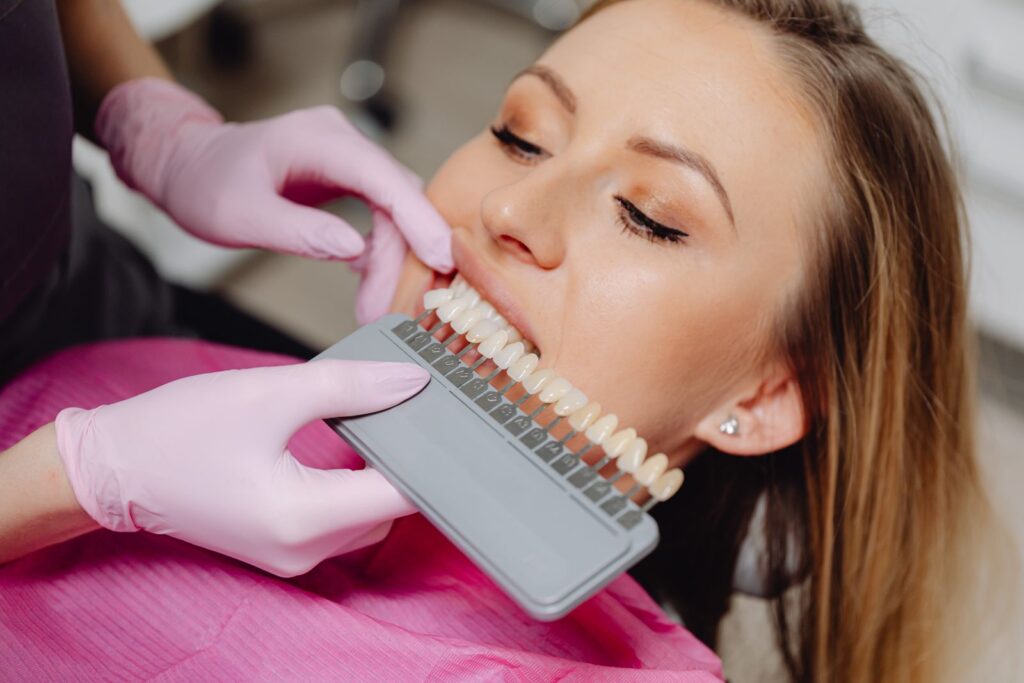
The short answer
- Products sold to the public in the UK can contain or release no more than 0.1% hydrogen peroxide. The Oral Health Foundation says that is too weak to noticeably change tooth colour.
- Stronger whitening (up to 6% hydrogen peroxide) is legal only when a dentist, or a hygienist or therapist working to a dentist’s prescription, provides it after an examination, for people aged 18 or over.
- Anything above 6% is illegal to supply for cosmetic whitening.
- Whitening by a beauty salon or spa breaks the law, according to the Oral Health Foundation, and the provider may be unable to help if something goes wrong.
What UK law allows
The rules come from the Cosmetic Products (Safety) Amendment Regulations 2012. In plain terms (Oral Health Foundation, General Dental Council position):
| Hydrogen peroxide (contained or released) | Who can supply or use it |
|---|---|
| Up to 0.1% | Anyone, including shops and online sellers |
| Above 0.1% and up to 6% | Dentists only, after an exam, for adults, with the first application made by a dental professional |
| Above 6% | Not allowed for cosmetic whitening |
The General Dental Council treats whitening as the practice of dentistry, so only a registered dentist, or a hygienist or therapist working to a dentist’s prescription, may carry it out. You can check anyone’s registration on the GDC register.
Watch out: Do not buy products over 0.1% hydrogen peroxide online. The Oral Health Foundation warns against it, and the GDC says beauty therapists using more than 0.1% are breaching the regulations.
How strips work, and where the evidence stops
Strips are thin plastic films coated with a whitening gel that sit against the teeth for a set time each day. Cochrane’s 2018 review of home whitening found that whitening products work compared with no treatment or a placebo. It also found that strips tested at 5.5% to 6.5% hydrogen peroxide gave bigger improvements than tray gels at 10% carbamide peroxide, and that sensitivity and gum irritation were the most common problems, more so with strips and higher peroxide (Cochrane).
Here is the catch. Those trial strips contained 5.5% to 6.5% hydrogen peroxide, which is far above the 0.1% limit for products sold to the public in the UK. The evidence is for strengths you cannot legally buy in a shop here. The trials were also short, mostly at high risk of bias, and many were run or sponsored by manufacturers.
Some retail kits use a different chemical, such as PAP (phthalimidoperoxycaproic acid), to avoid the peroxide cap. We have not found independent trials of those kits that we can cite, so we cannot tell you how well they work.
What a dentist actually does
The NHS describes two main routes. Home kits use custom trays worn for around two to six weeks, with a gel supplied by the dentist. Laser or in-surgery whitening is usually done in one appointment of one to two hours. Side effects can include sensitivity to cold or sweet foods, sore gums or throat, and white patches on the gums. The NHS says whitening is not recommended for anyone aged 17 or younger, in pregnancy or while breastfeeding, or for people with crowns, dentures or implants, and that it is not available on the NHS (NHS).
Cost: strips against a dentist
| Route | Typical UK price | Time | Strength |
|---|---|---|---|
| Shop-bought strips or kit | roughly £20 to £80 | set by the pack | 0.1% hydrogen peroxide at most |
| Dentist home trays | roughly £250 to £450 | 2 to 6 weeks | up to 6% hydrogen peroxide, supplied by a dentist |
| Dentist in-chair | roughly £350 to £700 | 1 to 2 hours | up to 6% hydrogen peroxide |
These ranges come from clinic and directory price guides published in 2026, and a survey of 2,065 practices reportedly put the median whitening price near £380. Treat all of them as rough. Ask for a written price for a complete course, including the consultation, before you agree.
How long results last
The NHS says that if you follow your dentist’s advice, the effect may last for around three years. Coffee, tea, red wine and smoking shorten it. Top-ups cost extra, so ask for the price of a top-up kit when you are quoted.
A safer way to choose
- Book a dental check-up first. The NHS says whitening is not recommended if you have crowns, dentures or implants, and a dentist can tell you whether it suits your mouth.
- Ask a registered dentist for a quote for take-home trays and an in-surgery session. Check their registration on the GDC register.
- If you want to stay in shop products, check the label for its hydrogen peroxide percentage. If it lists carbamide peroxide, our kit comparison tool converts it to the equivalent hydrogen peroxide so you can see whether it is within the legal limit.
- Stop and see a dentist if you get pain that lingers, burning gums or white patches that do not fade.
See our guide to private and NHS dental costs for how dental work is priced, and our NHS access guide if you cannot find a dentist.
Key takeaway: The effective home products in the research are the ones you cannot buy in a UK shop. If you want a clear change, go through a registered dentist.