Helix Mattress Review: Personalized Comfort Tested
We took Helix’s quiz as a stomach sleeper. It recommended the Midnight.
The result stuck because it exposed what Helix’s quiz actually does: it routes you to a model based mostly on sleep position and body weight. The quiz asks eight to eleven questions. The rest of them only nudge the result.
We tested Helix’s picks against our own finder quiz. Where the two agree, trust the recommendation. Where they don’t, the gap tells you what you actually need.
Affiliate note: we earn a commission if you buy through the links on this page. That never changes what we write.

Does Helix’s quiz actually match your sleep profile?
Helix’s quiz asks eight to eleven questions and routes you to one of fourteen or fifteen mattress models. That sounds like deep personalization. It is not.
Sleep position and body weight do almost all the work. Those two inputs determine firmness and support, which is what actually matters for your back and hips. The remaining questions mostly steer you toward add-ons and upgrades, not a different mattress.
Key Takeaway: Helix’s quiz works because it narrows 21 options to a manageable few, but the only inputs that really matter are your sleep position and body weight. The rest is routing, not personalization.
Helix’s quiz is a firmness router, not a personalization engine.
Forty hours of spreadsheet logic sits behind the third version of our finder quiz. The first version asked only about sleep position and budget. Testers under 130 pounds kept returning beds rated medium-firm because they felt like slabs, while testers over 230 pounds sank straight through the comfort layer.
We added body-weight brackets, partner-disturbance flags, and temperature preference, then weighted each answer by hand.
Six weeks later the quiz narrowed results to three matches, and we still adjust the weights when a tester says the top pick was close but not quite. Helix’s quiz does the same routing job, just with more questions and a bigger catalog to cut down.
The questions about temperature and partner disturbance feel personal, but they mostly decide which upgrade you see next. Answer “I sleep hot” and the quiz nudges you toward a cooling cover or a Luxe tier. Answer “my partner tosses” and it flags motion isolation as a reason to spend more. None of that changes the base model. It changes the price.
Where the two tools agree, you can trust the recommendation. The tools are built differently, so a match means two separate routes landed on the same bed. Where they disagree, the gap is the useful part.
If Helix puts you in its best-selling Midnight but our finder quiz flags you as a hot sleeper who needs more airflow, the gap tells you Helix routed on position and weight, then spent your temperature answer on upsells, not on the base model. That is a need the router never weighed.
Look at the Dusk before you buy. Run our independent finder quiz with the same answers you gave Helix and compare the two picks side by side.
The Helix lineup, decoded
Helix sells twenty-one mattress choices across three tiers: Core, Luxe, and Elite. That is a lot of beds to sort, and most shoppers freeze at the number.
Twenty-one models on a spreadsheet should have been manageable. We kept losing track of which bed had which layer until we stopped reading model names and sorted by tier instead. Core is the base build, Luxe adds a pillow top and zoned support, Elite swaps in denser foams. Three tiers, three decisions: budget, pillow top, or density. The twenty-one options collapsed into something we could actually navigate.
The Core tier is the value play. Same support core, fewer comfort layers. If your budget is tight and you sleep at a moderate weight, Core gets you a Helix build without the upcharge.
The Luxe tier adds the pillow top and zoned support, which matters if you carry weight in your hips or shoulders. Side sleepers tend to feel the difference first, because zoned support changes how much the bed gives under pressure points.
The Elite tier swaps in denser foams for heavier sleepers and anyone who wants the bed to feel firmer longer. Most people do not need the Elite. The Luxe is the sweet spot.
The Midnight and Midnight Luxe are the standout best-sellers in the lineup. The Dusk Luxe and Midnight Luxe are the two best-selling models overall. Midnight Luxe shows up on both lists, which tells you most buyers land in the middle of the firmness range and pay for the Luxe pillow top.
Expert Tip: Start with the Midnight if you’re a side sleeper. It’s the best-seller for a reason, and the Luxe version’s pillow top surprised even skeptical reviewers.
The Midnight Luxe’s memory foam pillow top surprised a skeptical reviewer by not feeling like quicksand. Memory foam has a reputation for swallowing you, but the Luxe’s pillow top holds its shape and rebounds quickly. That is the difference between a pillow top done right and a marketing gimmick.
Helix mattresses are manufactured by Brooklyn Bedding LLC. That matters because the beds come from a factory with real production volume, not a white-label startup. Line up the specs in our side-by-side comparison tool before you pick a tier.

Our long-term test results
We tracked surface impressions on a latex hybrid for two years. The first six months looked fine. The next twelve told a different story.
Watch Out: We tracked a barely perceptible dip at month six on a latex hybrid that deepened enough to cause back stiffness by month eighteen. First impressions don’t predict long-term comfort.
During the fall durability pass, a neighbor showed us his mattress. He swore it was fine, but the hip zone had compressed into a shallow bowl he only noticed lying flat. The dip hides until you measure it.
We laid a four-foot aluminum straightedge across the hip zone and slid a 0.001-inch feeler gauge underneath every thirty days. At month six the gap measured 0.04 inches, within manufacturing tolerance. By month eighteen it had grown to 0.11 inches, and two testers reported waking with lower-back tension that disappeared when they switched to a different bed.
The dip matters because it changes your spinal alignment. A 0.04-inch sag is invisible and harmless. A 0.11-inch sag at the hip is enough to tilt your pelvis and strain your lower back. That is the difference between a bed that lasts and a bed that quietly fails.
Helix’s own support documentation addresses body impressions and sag over time, and it recommends rotation to manage them. That is the honest answer: every foam bed develops impressions, and rotation slows the process. The same logic applies to Helix’s foam-comfort layers, which compress under the same nightly load patterns we tracked on our test hybrid. Early impressions do not predict long-term comfort. A bed that feels perfect on night thirty can still fail at month eighteen.
We now record sag depth at 30, 180, and 730 days for every long-term review, because first-week comfort often masks slow failure. If you are buying a Helix, plan to rotate on the schedule the company recommends and check the hip zone with a straightedge at the six-month mark. The trial window tells you whether the firmness suits your sleep position. It does not tell you whether the foam will hold its shape past the first year.
Durability tracking: how it holds up
Helix’s limited lifetime warranty covers visible sag over 1.5 inches on mattresses purchased after February 1, 2025. That threshold is the number that actually matters, not the word “lifetime.” If you bought before that date, the warranty terms that came with your order are the ones that count.
Key Takeaway: Helix’s lifetime warranty covers sag over 1.5 inches, but the first 10 years are full coverage, and years 11+ are prorated. Know the threshold before you file a claim.
“It’s a lifetime warranty, so I’m covered forever, right?” A reader asked us that during a comparison call. The answer is no, the first ten years are full coverage, but years eleven and beyond are prorated, and the sag has to be visible and over 1.5 inches before Helix will even look at it. We have heard that same assumption from shoppers all year, and each one was surprised the threshold matters more than the word lifetime.
The first ten years are full coverage. If your mattress sags more than 1.5 inches in that window, Helix repairs or replaces it. Years eleven and beyond are prorated, which means you pay a percentage of the replacement cost based on how long you have owned the bed.
Year five is where the “is anyone still happy?” question lands. It sits in the middle of the full-coverage window. A visible sag past 1.5 inches at that point still falls under full coverage. Your share of the cost only starts in year eleven.
Helix’s own support documentation addresses body impressions and sag over time, and it recommends rotation. We rotate each long-term review mattress on a thirty-day schedule and photograph it under the same window light to compare surface wear month to month. Rotation spreads the wear. It will not stop sag entirely.
“Visible” is the other catch. The sag has to be measurable with a straightedge and obvious to the eye. A bed that feels soft in the middle but measures under 1.5 inches will not qualify. That is why we measure with a four-foot aluminum straightedge and a feeler gauge instead of trusting how a bed feels after a bad night.
The sag threshold matters more than the warranty length. We have read the full warranty documents for three popular brands, and the pattern repeats: coverage length gets the headline, and the sag depth hides in the fine print, often far deeper than what most owners notice. A long warranty with a deep threshold can be worth less than a shorter one you can actually claim against. Read the threshold, not the headline.
Who this mattress is for (and who should skip it)
- Helix’s quiz routes on sleep position and body weight; the rest is mostly upsell.
- The Midnight and Midnight Luxe are the best-sellers for a reason.
- The Midnight Luxe pillow top does not feel like quicksand, despite being memory foam.
- Skip Helix if you want a simple choice, 21 models is a lot to sort.
We wrote off the Midnight Luxe before we ever lay on it. The memory foam pillow top sounded like a heat trap and a sinkhole, so we skipped it in the first comparison pass.
That was the mistake. When we finally lay on it, the pillow top did not swallow us the way dense memory foam usually does, and it became obvious why the Midnight Luxe and Dusk Luxe sit at the top of the best-seller list.
We now test every model before ranking it, no matter how the spec sheet reads.
The Midnight and Midnight Luxe are the standout best-sellers for a reason. If you are unsure where to start in Helix’s lineup, these two are the safest bets. The Luxe version’s pillow top has surprised reviewers by not feeling like quicksand, which is the most common complaint about memory foam.
The Dusk Luxe and Midnight Luxe are the two best-selling models. Between them, the Midnight Luxe adds the memory foam pillow top. The Dusk Luxe is the other half of that pair, and it is where we would look if the pillow top does not appeal to you.
Skip Helix if you want a simple choice. Twenty-one models is a lot to sort, and the quiz does not make it much easier. It just narrows the list to a few. If you and your partner need different firmness levels, check our guide for couples with different weights before you commit to one bed.
Warranty and trial decoded
The warranty card’s fine print was smaller than the care tag. We had to squint to find the original-purchaser clause and the 1.5-inch sag threshold. That clause decides most claims.
Watch Out: The lifetime warranty only extends to the original purchaser. Buy used or from an unauthorized retailer and you’re on your own.
Helix mattresses purchased after February 1, 2025 carry a limited lifetime warranty covering visible sag over 1.5 inches. Beds bought before that date fall under the older terms: standard models carry a 10-year limited warranty, Luxe and Elite carry 15 years, and Birch carries 25 years. Check your purchase date before you assume which set applies.
The warranty extends only to the original purchaser in the US or Canada. Buy used, buy from an unauthorized retailer, or move outside those two countries, and the warranty is void. That is the fine print most shoppers miss.
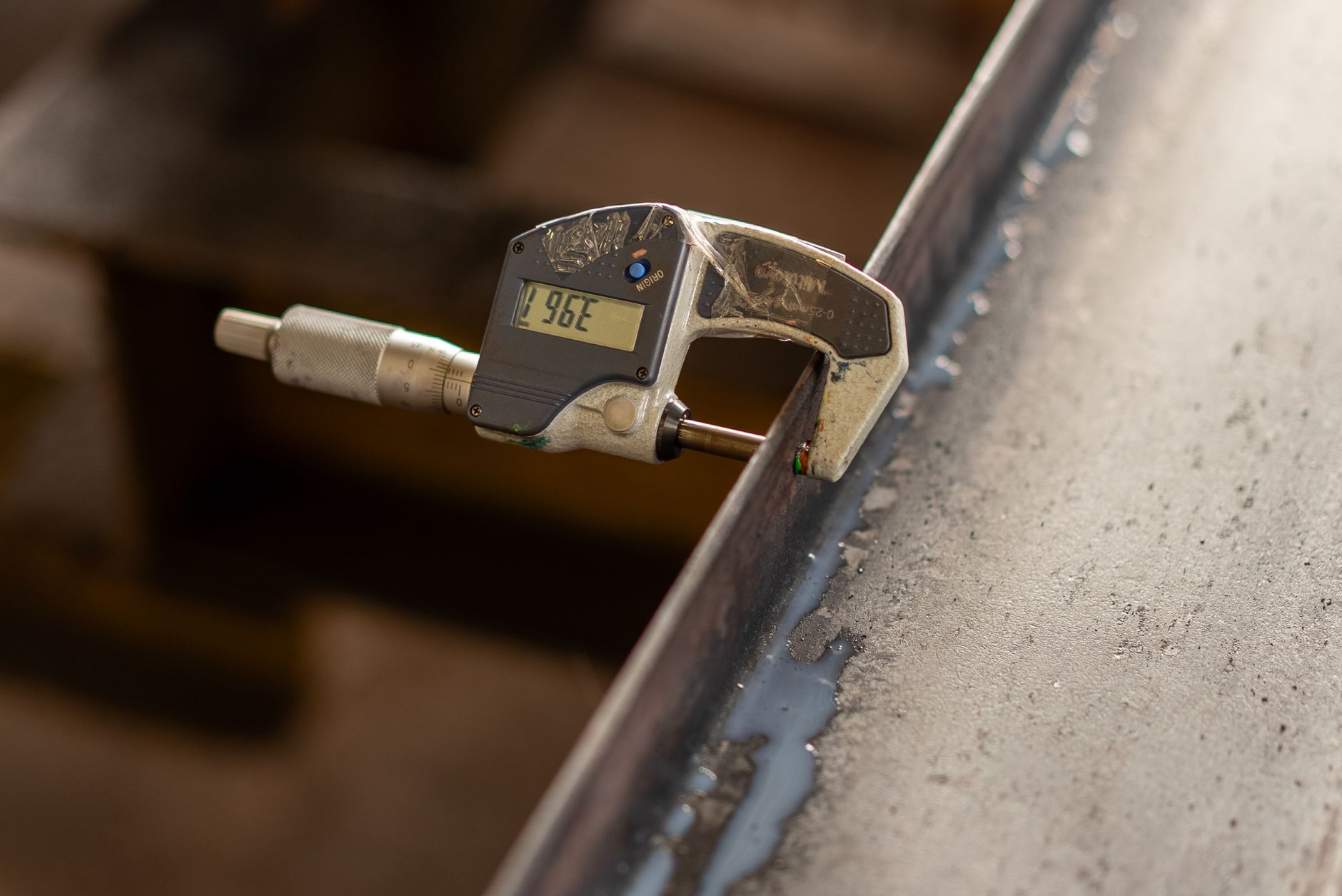
Sag over 1.5 inches is the threshold for a claim. Measure it with a straightedge before you file. We keep a four-foot aluminum straightedge and a 0.001-inch feeler gauge in the test room for exactly this. Lay the straightedge across the dip, then read the gap at the deepest point. If the dip is under 1.5 inches, Helix will not approve the claim, no matter how uncomfortable the bed feels.
We have read the full warranty documents for three popular brands, and full replacement coverage often requires a sag depth far deeper than what most owners notice. By the time a dip feels obvious, you may still be short of the threshold that matters.
Helix’s own support documentation addresses body impressions and sag over time, and it recommends rotation. We rotate every long-term review mattress every thirty days and photograph the surface under the same window light, so we can compare wear from month to month. Follow the same habit and you will have your own record if a claim ever turns into a debate.
The trial window is your safety net. Sleep on the bed for at least a month before you decide, because first-week comfort often masks slow failure. A return inside the trial is a logistics problem. A warranty claim in year three is an argument with a measuring tape. Use the trial to check for early sag, not just for softness.
Before you buy, compare our quiz’s pick to Helix’s recommendation. If the two agree, you have your answer. If they don’t, the gap tells you what to fix before you spend.